中新社北京7月5日电 北京时间7月5日,2023年男篮世界杯亚大区(亚洲/大洋洲地区)预选赛第二阶段分组出炉,中国男篮与澳大利亚队、日本队、哈萨克斯坦队、伊朗队和巴林队同在F组,晋级世界杯正赛面临挑战。随着2023年男篮世界杯亚大区预选赛第一阶段的比赛全部结束,第二阶段的分组也随之产生。
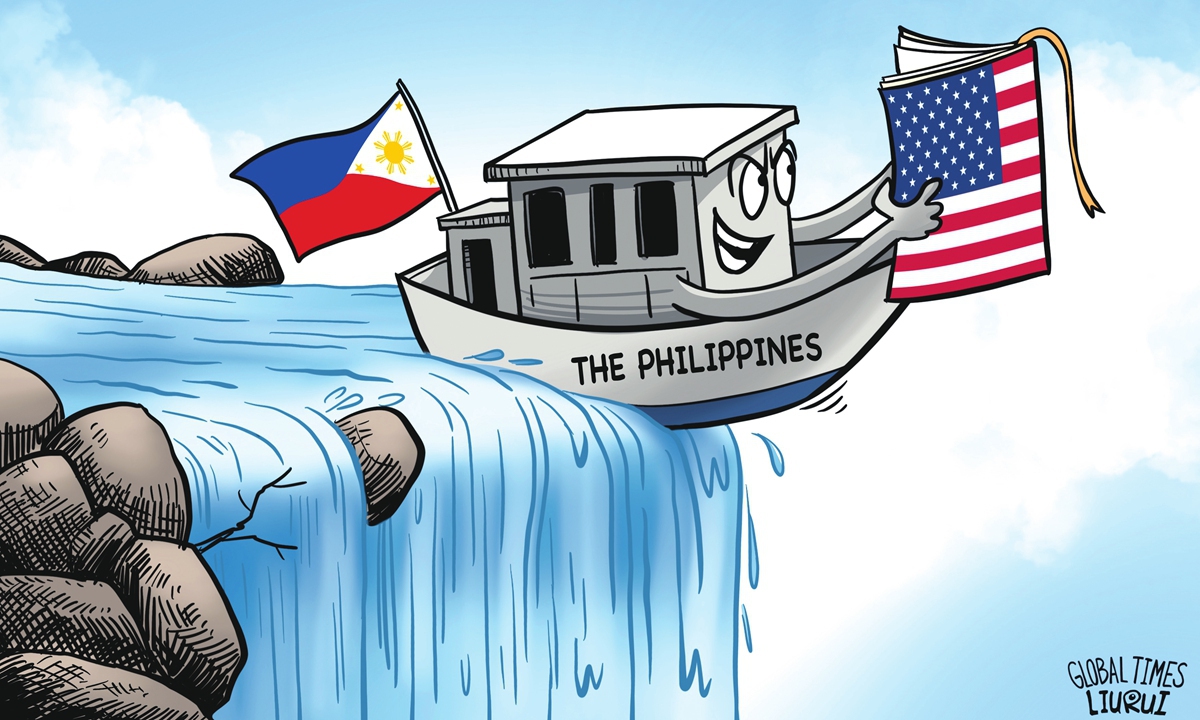
Illustration: Liu Rui/GTUS Pentagon official Elbridge Colby's latest Manila speech, in which he called on allies to "invest more" in their own defense and stressed that Washington wants "partners, not protectorates," has drawn attention from some Philippine media. Colby's claims also expose the fragility of the Manila-Washington alliance and Washington's push to enlist "Indo-Pacific" allies in serving its own strategic interests, a Chinese expert said, warning that the Philippines, by placing itself on the front line of provocations against China, risks being a geopolitical pawn left to bear the consequences on its own.
While delivering a speech at the Stratbase Institute in Manila, Philippines, on Monday, Colby, the Under Secretary of War for Policy, laid out the US' so-called "flexible realism" approach to the Indo-Pacific, stressing that the US is "definitely not disengaging from Asia" but strengthening its forward posture and seeking to build a "denial defense" along the First Island Chain, according to a transcript of the speech released on the US Department of War website.
At the same time, he called on US allies and partners to step up, invest more in their own defense, and take responsibility for their own sovereign security. "We are looking for partners, not protectorates," Colby claimed.
The claims have drawn attention from some Philippine media outlets, with some linking them to the South China Sea issue. However, the transcript of Colby's speech showed that he did not mention China, the Global Times found.
A Manila Bulletin report noted that after calling on allies to invest more in defense, Colby cited the Philippines as an example of the "kind of partner Washington wants to work with." He praised Manila for "strengthening its military and coast guard capabilities while deepening operational cooperation with the US" amid what the report described as China's "aggression" in the South China Sea.
Colby's visit to Manila marked his first official trip to Southeast Asia as an undersecretary under the Trump administration. He is scheduled to travel from Manila to Jakarta, Indonesia; Bangkok, Thailand; and Phnom Penh, Cambodia, said the report.
Meanwhile, a Manila Standard report interpreted Colby's remarks as showing that "the US is working closely with the Philippines" to strengthen Manila's military capabilities and protect its sovereign rights in the South China Sea, despite the fact that Colby did not mention China in his speech.
The US appears to be adopting a more retrenchment-style approach, shifting from leading directly to relying on regional allies to take the frontline role while providing support. This approach allows Washington to advance its interests while lowering its own costs, Song Zhongping, a Chinese military affairs expert, told the Global Times.
Song noted that Washington seeks to use repeated maritime frictions to tie down Chinese resources, which helps explain Colby's praise for Manila: the Philippines bears part of Washington's strategic burden while receiving largely rhetorical US support.
A South China Morning Post report on Tuesday noted that Colby avoided mentioning the recent disputes over Huangyan Dao, despite Washington having criticized China's establishment of a nature reserve there just two days earlier. The report described the omission as a "measured tone" ahead of a potential meeting between the Chinese and US leaders.
Washington's primary concern is its own interests. At the core of its "Indo-Pacific strategy" is strengthening its alliance network by pushing partners such as the Philippines to shoulder greater security burdens in pursuit of US strategic goals. As US-China diplomatic dynamics evolve, countries serving as Washington's geopolitical spearheads in confrontations with China risk being left behind, said some observers.
Song noted that this also reveals the fragility of the US-Philippine relationship.
The US has encouraged the Philippines to take the front line in confrontations with China while offering mostly rhetorical support. Should tensions escalate, Manila would bear much of the cost on its own, said the expert.
。根据预选赛第一阶段的成绩,4胜2负的中国男篮与伊朗队同积10分,分别暂列F组的第三、第四位。暂列F组前两名的分别是澳大利亚队(6战全胜)、哈萨克斯坦队(5胜1负),后两名是日本队和巴林队(均为2胜4负)。E组的6支队伍是:新西兰队、黎巴嫩队、约旦队、菲律宾队、沙特阿拉伯队、印度队。2023年男篮世界杯将在印度尼西亚、日本和菲律宾进行,这将是篮球世界杯首次在多个国家举办,亚大区在本届世界杯赛上获得了8个参赛席位。目前,身为东道主的日本队和菲律宾队已获直通世界杯正赛的资格,但作为另一个东道主,实力相对较弱的印尼队还需迈过一道“门槛”,跻身亚洲杯赛八强,才能获得晋级世界杯正赛的门票。
根据相关规则,如印尼队获得亚洲杯前八名,E、F组的前两名和两个小组成绩最好的第三名晋级世界杯正赛;如印尼队无缘亚洲杯八强,则两个小组的前3名晋级。此外,第一阶段已交战的双方不再对阵,成绩带入第二轮。

二 | 因此,中国男篮在第二阶段赛的对手将是哈萨克斯坦队、伊朗队和巴林队。目前排名世界第三的澳大利亚队无疑是F组实力最强的球队,中国队在第一阶段赛中的2负正是拜其所赐。第二阶段,中国男篮的对手也不容小觑。作为中国男篮的老对手,伊朗队在2007年、2009年、2013年三次获得亚锦赛冠军。在2014年韩国仁川亚运会上,中国男篮也正是负于伊朗队无缘四强。在第一阶段赛中,哈萨克斯坦队双杀伊朗队,成为最大黑马。在6月中旬国际篮联公布的男篮世预赛亚大区战力榜中,哈萨克斯坦队位居榜首,中国男篮名列第四。而在刚刚结束的第三窗口期赛事中,巴林队又爆冷战胜哈萨克斯坦队,显示出不俗实力。

三 | 因此,中国男篮要想晋级世界杯正赛,将面临不小挑战。目前,2023年男篮世界杯预选赛亚大区第二阶段的赛程已经出炉:8月25日哈萨克斯坦队对阵中国队,8月29日中国队对阵巴林队,11月11日伊朗队对阵中国队,11月14日巴林队对阵中国队,2023年2月23日中国队对阵哈萨克斯坦队,2023年2月26日中国队对阵伊朗队。(完)